Dubai · Web Design
Web design services in Dubai — structure first, surface second.
Structure is decided before the first pixel, then the interface is drawn in Figma and handed over as a component library your developers build straight against. The result is a design that survives contact with the build instead of being reinterpreted in it.
- Wireframes before visuals
- Figma files in your account
- Designed for Arabic and RTL
What this covers
Design here means the decisions, not the decoration.
Four things every engagement in this pillar does, whichever of the five services you start from.
Structure before surface
Sitemap, page hierarchy, wireframes and the content model, agreed while everything is still grey. A layout argument is cheap at this stage and expensive once the visual design exists.
A system, not a folder of screens
Components, states, type scale and spacing, built in Figma as one library. Developers build against the system, and your team extends it later without commissioning a new screen every time.
Designed in both directions
Arabic is a layout mirror, not a font swap — navigation, icons, form fields and charts all flip, and the type needs a face drawn for Arabic. Settled during design rather than retrofitted after.
Contrast, targets and order
Colour pairs measured, tap targets sized, focus order and heading structure decided while they are still design decisions — which is when they cost nothing instead of a remediation project.
Design services
Five services, one design practice.
Each starts from a different place: nothing designed yet, a site that has outgrown its design, a page that leaks, or a file nobody can open properly. The method underneath them does not change.
Research, wireframes and interface design in Figma, delivered as a component library your developers can build against directly.
You receiveFigma design system + prototype
A rebuild that keeps the search equity you have already paid for — redirects mapped, URLs preserved, rankings monitored through launch.
You receiveRedesign + full redirect map
Auditing and testing what you already run: friction removal, form redesign and structured experiments with the changes actually shipped.
You receiveTest programme + implemented changes
Legacy design files rebuilt as editable, component-based Figma projects — PSD, Illustrator, Sketch, XD and PDF sources all handled.
You receiveLayered, componentised Figma file
Single-purpose pages for a campaign or launch, designed and built around one action and measured against one number.
You receiveDesigned and built landing page
How to choose
Which of the five you actually need.
They overlap less than they look. Most of the money wasted on design is spent on the right service at the wrong moment — so this is the condition that selects each one, and the condition that rules it out.
| Option | When it fits | When it does not |
|---|---|---|
| Design from scratch | There is no design yet, or the one you have cannot be extended — a new site, a new product, or a rebuild where the structure itself is the problem. | The layout works and only one step in the journey leaks. Redesigning a whole site around a single failing form costs more than fixing the form. |
| Rebuild what exists | The site is live, dated, and carrying search equity you have already paid for. Half the work is redirect mapping and URL preservation, not visuals. | The structure is sound and the pages perform. Rebuilding a site that ranks, in order to change how it looks, risks the ranking for a cosmetic gain. |
| Improve what you have | Traffic arrives and does not convert, and the site is otherwise sound. Audit, remove the friction, test, ship the change — on what you already run. | You are replacing the site within months. Testing on foundations you are about to demolish buys findings that will not survive the rebuild. |
| Rescue old design files | The design already exists in PSD, Illustrator, Sketch, XD or PDF, and what you need is an editable, component-based Figma file your team can work in. | The design itself is the problem. Conversion reproduces the decisions in the file faithfully; it is not the place where they get questioned. |
| One campaign page | One campaign, one offer, one action, measured against one number — and the main site, with its navigation and its other twelve messages, would only get in the way. | The buyer needs several pages of evidence before they act. A considered purchase does not fit on one page, and forcing it there reads as a pitch. |
Our approach
Five steps, and you see the file at the end of each.
The order is the point: everything that is cheap to change is decided before anything that is expensive to change.
01
Frame
What each page has to make happen, who arrives on it, and the constraints around it — the platform, the languages, who edits it afterwards, and what content actually exists today.
02
Structure
Sitemap, page hierarchy and wireframes, reviewed in grey. Settling layout while nobody is distracted by colour is the cheapest revision available on the whole project.
03
System
Type scale, a colour set with every pair checked for contrast, spacing, and the components themselves — assembled in Figma as the one library everything after this step is drawn from.
04
Design
Key pages designed at every breakpoint that matters, in both directions where the site is bilingual, then wired into a prototype you can click through before a line of code is written.
05
Handover
Components, states, tokens and the notes an engineer needs, walked through with the people who will build it — ours or yours. The file lives in your account, not ours.
Stack
Boring technology, chosen so the next developer recognises it.
Nothing here is exotic. That is the point: an unusual stack is a lock-in mechanism dressed up as innovation.
- Front-end
- Next.jsReactTypeScriptTailwind CSSAstro
- CMS & commerce
- WordPressShopifySanityPayloadWooCommerce
Proof
Live work, open to inspection.
Public sites we designed and built. Open one and judge the work, not the claim.
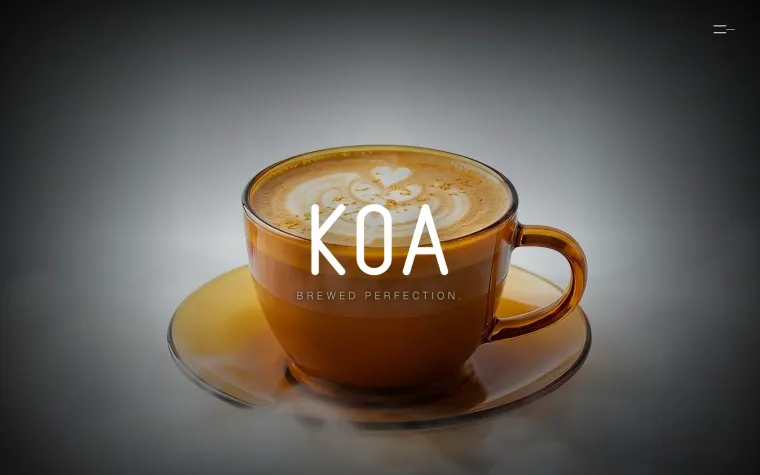 Food & beverage
KOA Eatery (opens in a new tab)
A specialty coffee house in Oman, where the site carries the room rather than a catalogue — sourcing and craft up front, and QR ordering that has to work one-handed at a table, on a phone, on café wifi.
- Next.js
- Vercel
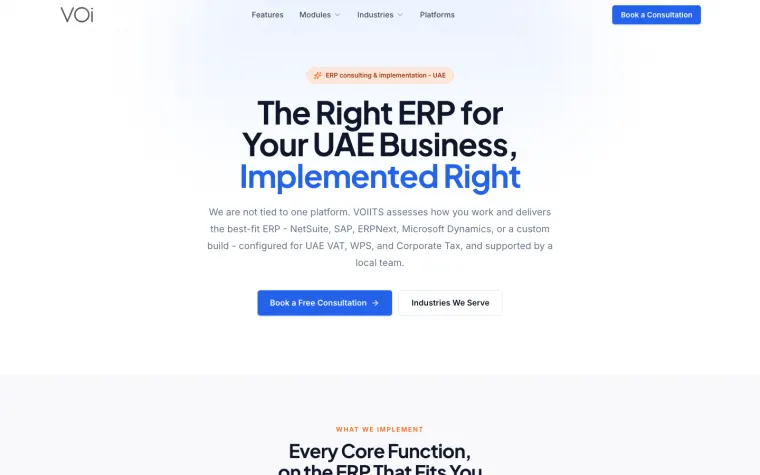 ERP consulting
VOIITS (opens in a new tab)
A vendor-agnostic ERP implementation practice in Dubai — NetSuite, SAP, ERPNext and Dynamics — where the site has to make an abstract, long-cycle service concrete, and carry UAE compliance detail like VAT, WPS and Corporate Tax without reading as a spec sheet.
- Next.js
- Vercel
Pricing
What design work costs.
AED 16,000
from
The Launch tier — a five-to-eight page site designed and built. Larger page sets, a custom content structure and Arabic sit in the Growth tier from AED 48,000. Design-only engagements and single landing pages are quoted on their own. Prices exclude 5% VAT.
What changes the priceWhat that covers
- Custom design, never a bought theme
- Wireframes agreed before any visual design
- Interface design in Figma, as a component library
- A clickable prototype ahead of the build
- Mobile-first, at every breakpoint that matters
- Figma files in your account from day one
Related
The rest of what we do.
Two disciplines and the care plan that keeps the result alive. This page covers one of them.
Questions
Asked before the design starts.
A designed and built site starts at AED 16,000 for five to eight pages. The main commercial site for an established business usually falls between AED 48,000 and AED 95,000, where the design covers a larger page set, Arabic and a custom content structure. Prices exclude 5% VAT, and what moves a project between tiers is scope rather than page count alone.
On a typical six-week marketing site, design runs from roughly week two to week four: structure and wireframes first, then the interface, then a prototype. Larger builds extend it. The usual cause of slippage is content, which is why we start gathering it in week one rather than waiting until the design is finished.
That depends on which of the five you start from. Every engagement ends with the design expressed as a system — components, states and tokens — plus the notes an engineer needs to build it accurately. Beyond that, a redesign adds the redirect map and the URL decisions, a file conversion adds a rebuilt component structure, and a CRO engagement adds a record of what was tested and what the number did afterwards.
Yes. Design-only engagements are normal, and the handover is identical either way: a component library, a prototype and a walkthrough with whoever writes the code. Where a design decision would be expensive to build on the platform you have chosen, we say so during design rather than leaving your developers to discover it.
No. The design is drawn for your content and your audience. It is still designed inside the constraints of the platform you will run on — what a WordPress editor or a Shopify theme can genuinely express — because a design that fights its own CMS becomes a weekly problem for the people publishing on it.
Yes, and the decision belongs at the start of the engagement rather than near the end of it. Arabic is a second layout, not a translation of the first, so it moves the sitemap, the navigation and the content model with it — which is why it is settled in the architecture phase alongside those, not once the English design is approved. Adding it afterwards means reopening decisions the layout has already made. Arabic is included from the Growth tier upwards.
Part of it. Contrast ratios, tap target sizes, focus order, heading structure and error states are settled in the design file, because each is far cheaper to decide than to remediate. A design that only becomes accessible during the build has usually lost something on the way — most often the colour palette it was approved on.
Against a phase gate rather than a round count. Each of the five steps ends in something you review, and the next starts from the version you approved, which is what makes a gate a gate. Changes inside the agreed scope are simply the work; anything that adds pages, screens or a second language is quoted as a change order before it starts and lands on a milestone, not as a surprise on the final invoice.
Ready to build something that lasts?
Tell us what you need. You will get a scoped response with an indicative price — from an engineer, not a salesperson.